Turn on screen reader support
To enable screen reader support, press Ctrl+Alt+Z To learn about keyboard shortcuts, press Ctrl+slash
Turn on screen reader support
To enable screen reader support, press Ctrl+Alt+Z To learn about keyboard shortcuts, press Ctrl+slash

Ground Improvement
How Ground Improvement Contractors Enhance Project Schedules
July 1, 2026
When a construction project falls behind schedule, the causes are often visible: weather delays, material shortages, labor constraints, or permitting issues.
What isn’t always visible is what’s happening beneath the surface.
Poor soil conditions can quietly derail a project before vertical construction even begins. Unexpected settlement, unsuitable soils, redesigns, and foundation changes can all add weeks, or even months, to a project timeline.
That’s where experienced ground improvement contractors make a difference.
By addressing subsurface challenges early, ground improvement contractors help general contractors keep projects moving, reduce uncertainty, and avoid costly delays. Through proven ground improvement solutions, contractors can strengthen weak soils, improve constructability, and help projects stay on schedule from the very beginning.
Every Day Counts on Today’s Job Sites
General contractors are under more pressure than ever to deliver projects on time.
Schedules are tighter. Owners expect faster delivery. Material lead times leave little room for unexpected setbacks. Every trade depends on the previous one finishing on schedule.
When unsuitable soils are discovered late in the process, the entire schedule can shift.
Common consequences include:
- Waiting for redesigned foundations
- Delayed concrete pours
- Idle crews and equipment
- Rescheduled subcontractors
- Increased project costs
The earlier these challenges are identified and addressed, the easier they are to manage.
Ground Improvement Helps Projects Stay on Schedule
Ground improvement is often viewed as a solution for poor soils, but it’s equally valuable as a schedule management strategy.
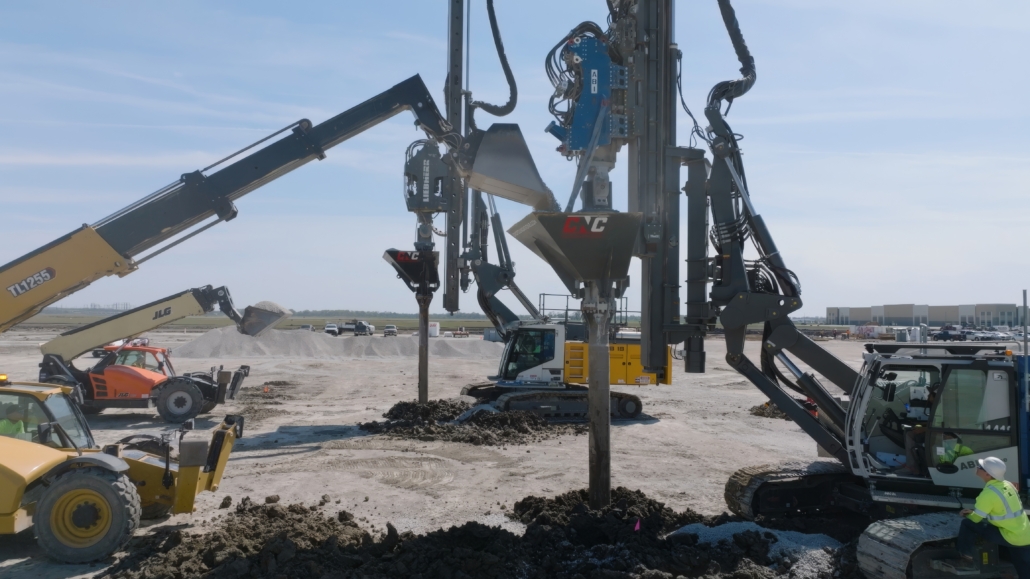
Rather than excavating and replacing unsuitable soils, which can require significant trucking, imported fill, testing, and weather-dependent work, ground improvement techniques can often stabilize the site more efficiently.
Depending on project conditions, solutions such as:
- Aggregate Piers (Vibratory Stone Columns)
- Rigid Inclusions
- Micropiles
- Helical Displacement Piles
- Wick Drains
can provide the support needed for shallow foundations while reducing construction time compared to traditional alternatives.
Every project is different, but selecting the right solution early can eliminate unnecessary delays later.
Early Coordination Saves Valuable Time
One of the biggest schedule advantages comes from involving a ground improvement contractor during preconstruction, not after problems arise.
Early collaboration allows the project team to:
- Review geotechnical reports before construction begins
- Evaluate multiple ground improvement options
- Coordinate with geotechnical and structural engineers
- Identify opportunities for value engineering
- Develop realistic installation schedules
When everyone is aligned before mobilization, there are fewer surprises once construction begins.
Faster Foundations Mean Earlier Vertical Construction
Ground improvement often allows projects to move into foundation construction sooner.
Instead of waiting through lengthy excavation and soil replacement operations, contractors can often begin foundation work shortly after ground improvement is completed.
That means:
- Concrete crews mobilize sooner
- Structural steel can be scheduled earlier
- Follow-on trades stay on schedule
- Owners gain occupancy faster
For many commercial projects, compressing even a few weeks from the schedule creates meaningful value.
Reducing Risk Throughout Construction
Schedule delays rarely come from one major issue.
More often, they result from several smaller problems compounding over time.
Experienced ground improvement contractors help reduce that risk by providing predictable installation processes, coordinating with the project team, and addressing subsurface challenges before they become field issues.
The goal isn’t simply improving soil.
It’s creating greater certainty for the entire construction schedule.
Why Experience Matters
Not all sites, and not all ground improvement solutions, are the same.
An experienced contractor understands how to evaluate soil conditions, collaborate with the design team, and recommend solutions that balance schedule, performance, and cost.
They also understand the importance of communication.
Keeping project teams informed throughout design, mobilization, installation, and testing helps avoid unnecessary delays and keeps everyone working toward the same timeline.
Partner with CNC Foundations Early
At CNC Foundations, we work alongside general contractors, developers, geotechnical engineers, and structural engineers to solve challenging soil conditions before they impact the schedule.
Our in-house engineering expertise, nationwide experience, and design-build approach allow us to identify practical ground improvement solutions that help projects move forward with confidence.
Whether your project requires Aggregate Piers, Rigid Inclusions, Micropiles, Wick Drains, or another ground improvement solution, our team is committed to helping you reduce risk, improve constructability, and keep your project on schedule.
The best way to avoid delays is to address what’s beneath the surface before construction begins. When ground improvement is part of the conversation early, your project is positioned for a smoother path from groundbreaking to completion.
See how CNC has helped contractors stay on schedule across a variety of industries in our Case Studies.
Have a project with challenging soil conditions? Contact CNC Foundations to discuss your project.