Turn on screen reader support
To enable screen reader support, press Ctrl+Alt+Z To learn about keyboard shortcuts, press Ctrl+slash

Ground Improvement, Wick drains
Wick Drains and Preloading: How to Accelerate Soil Consolidation
October 15, 2026
Your site needs a lot of fill to reach design grade. Or the geotechnical report says the soft soil needs to be loaded and allowed to settle before you build. Either way, you can’t start the building until that settlement happens. Depending on the soil, it can take many months. That’s a long time for a crew to wait.
Wick drains are one way to cut that wait down. Wick drains, also called prefabricated vertical drains, are thin drainage strips pushed straight down into soft soil in a grid pattern. When fill or other weight presses on the soil, water gets squeezed out. The drains give that water an easy way to escape, so the soil settles much faster than it would on its own.
Wick drains are usually worth a look when your site has soft soil and the plan includes deep fill or a temporary load to pre-settle the ground. Whether they’re the right fit depends on what’s in the ground and what the project needs.
What are wick drains and how do they work?

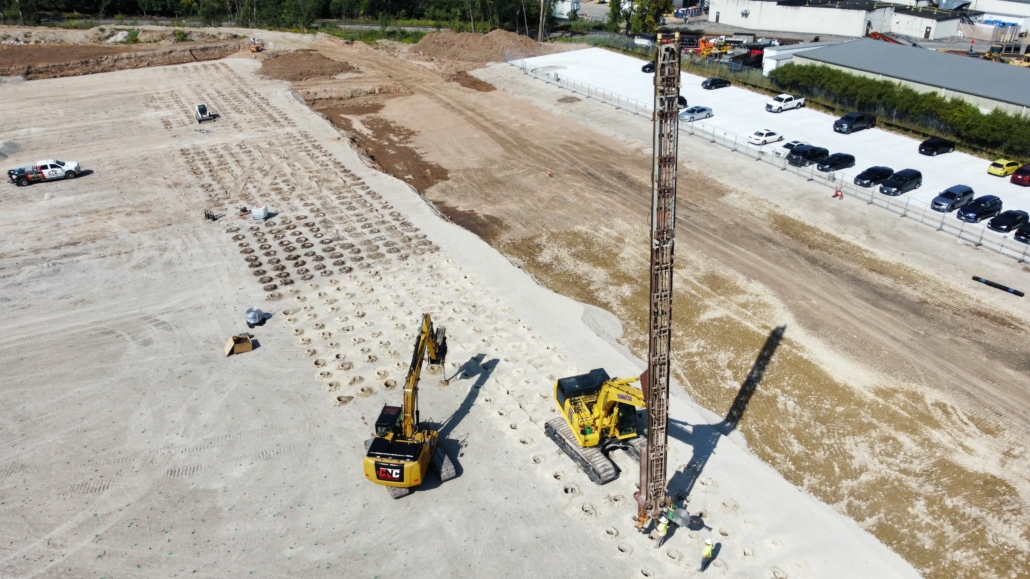
CNC Foundations at work on the Appleton, Wisconsin, warehouse expansion project, where ground improvement solutions, including wick drains and aggregate piers, helped address challenging soil conditions and support long-term foundation stability.
Soft soil holds a lot of water. When you put weight on it, that water gets squeezed out and the soil compresses. This is called consolidation, and it’s what causes the ground to settle. In soil where water moves slowly, the water has a long way to travel before it can get out, so the settling takes a long time.
Wick drains give the water a shortcut. Each drain is a flexible strip with grooves on both sides so water can flow through it easily. The strip is wrapped in filter fabric that lets water from the soil pass into the drain. The drains are installed in a grid, so the water in the soil is never far from one. It reaches a drain quickly and flows out through it, and the soil settles faster.
In short, wick drains speed up settlement that was going to happen anyway, so it’s done before construction starts. You can learn more about CNC Foundations’ wick drain services on our service page.
How do wick drains work with preloading?
Preloading, also called surcharge loading, means putting temporary weight on the site to make the soil settle before construction. Think of it as getting the settling done ahead of time so it doesn’t happen under the finished building. The catch is that in slow-draining soil, preloading by itself can take a long time.
That’s why wick drains and preloading are often used together. The extra weight squeezes the water out of the soil, and the wick drains give that water a fast way out. The two common situations are:
- Surcharge programs: the site is loaded ahead of time to settle the soil, and wick drains can shorten how long that takes
- Deep fills: a lot of fill is needed to reach design grade, and the soft soil below will settle under all that new weight
Either way, the goal is the same: finish the settling sooner so the project can stay on schedule.
When are wick drains worth considering?
Wick drains may be worth a look when:
- The site has soft soil that will settle under new fill or building loads
- A lot of fill is needed to bring the site up to design grade
- The plan calls for preloading the site before construction
- The soil drains slowly, so waiting for it to settle on its own would hold up the schedule
The decision should come from the geotechnical report, not just the schedule. The type of soil, how deep the soft layers go, and how fast water moves through them all affect whether wick drains will actually save time on your site.
When might wick drains not be enough on their own?
Wick drains are built to do one job: speed up settlement. Some sites have other needs too, so wick drains may be paired with another method or replaced by a different approach.
- The foundations need stronger support. If the footings need more bearing capacity, a reinforcing system like aggregate piers may be added in those areas. The Appleton project below used both.
- The site has mixed conditions. Soil can change a lot from one part of a site to another, and different areas may need different methods. CNC’s guide to choosing the right ground improvement methods walks through how those decisions are made.
What does this look like on a real project?
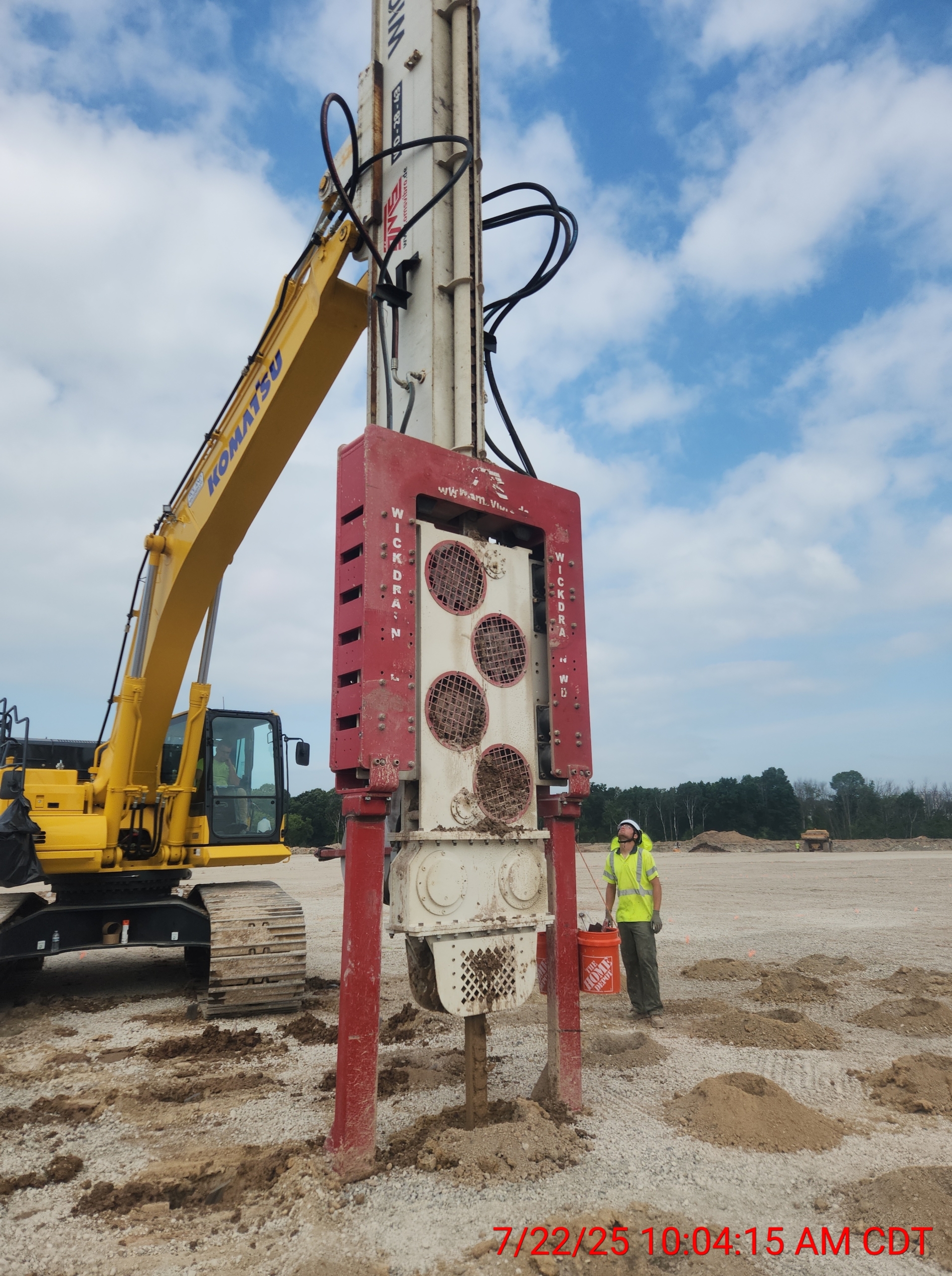
A CNC Foundations crew installs wick drains using a Komatsu excavator-mounted vibratory rig at the Appleton, Wisconsin, warehouse project to accelerate soil consolidation and prepare the site for construction.
CNC worked on two warehouse facilities in Appleton, Wisconsin, where deep existing fill sat on top of soft silt and clay. Without treatment, the site was at real risk of long-term settlement and schedule delays. CNC installed more than 17,000 wick drains to speed up settlement under surcharge loading. Where the building foundations needed more bearing capacity, the team added over 1,000 aggregate piers. Using both methods kept construction on schedule, gave the warehouse slabs and racks a stable base, and protected the site’s detention ponds and stormwater areas.
See how wick drains and aggregate piers were used on the Appleton warehouse project.
What do you need to know before choosing wick drains?
Before deciding on wick drains, the team should know:
- What kind of soil is on site and how deep the soft layers go
- How fast water moves through that soil
- How much fill is needed to reach design grade, and whether preloading is planned
- The building loads, including slab and rack loads
- Whether some areas also need stronger foundation support
- Site features that need protecting, like detention ponds or stormwater areas
Bring in a ground improvement contractor early. Wick drains are often one piece of a bigger plan, and the right mix of methods depends on what’s in the ground. CNC Foundations has supported commercial and industrial projects since 1987, with in-house project management, engineering, load testing, preliminary geotechnical design, and design-build construction. That means one team can look at the soil, the schedule, and the ground improvement options together.
Evaluating foundation options for an upcoming project? The right approach starts with understanding the soil conditions, loading requirements, and project constraints. Connect with your local Business Development Manager to talk through your site.