Turn on screen reader support
To enable screen reader support, press Ctrl+Alt+Z To learn about keyboard shortcuts, press Ctrl+slash
Turn on screen reader support
To enable screen reader support, press Ctrl+Alt+Z To learn about keyboard shortcuts, press Ctrl+slash

SUBSURFACE STABILIZATION SUPPORTING TURBINE FOUNDATIONS AT SUNZIA WIND FARM
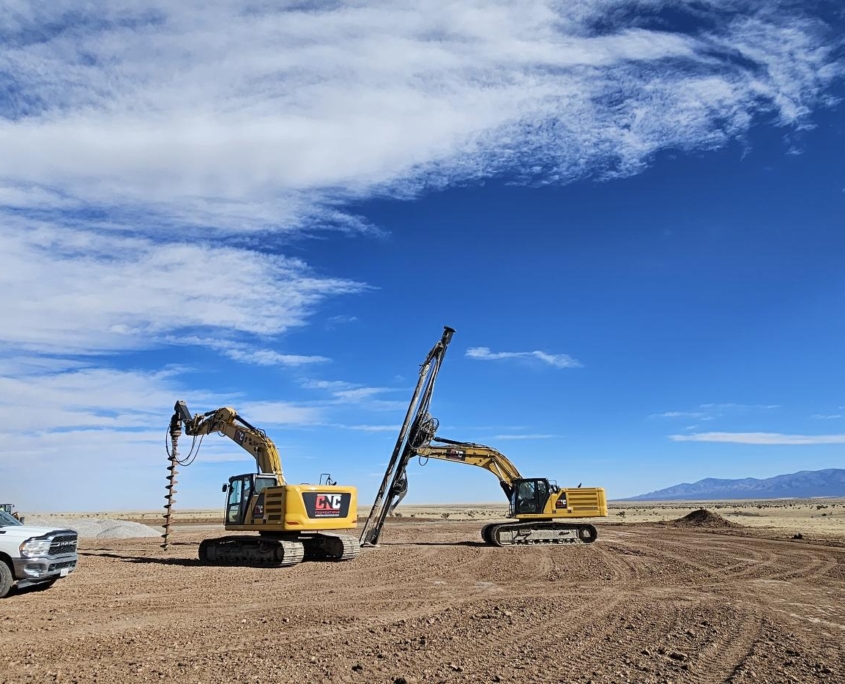
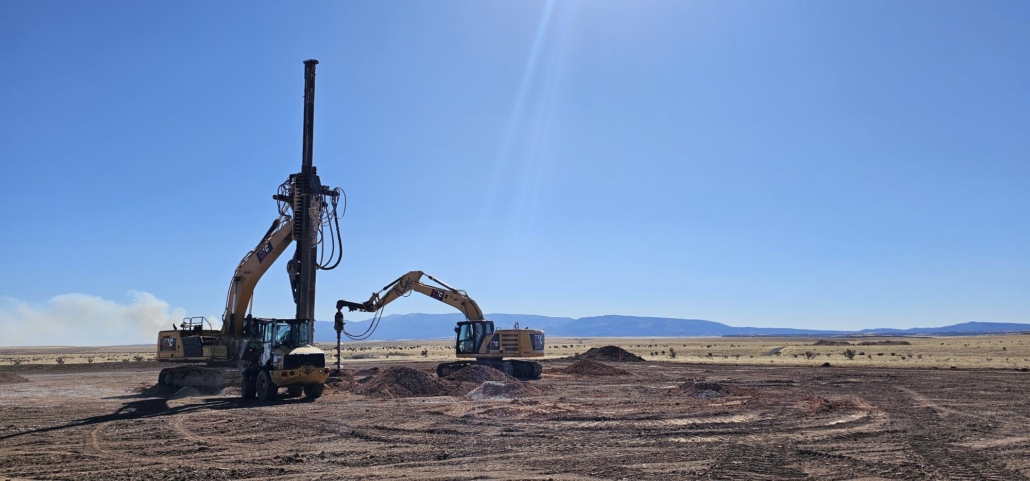
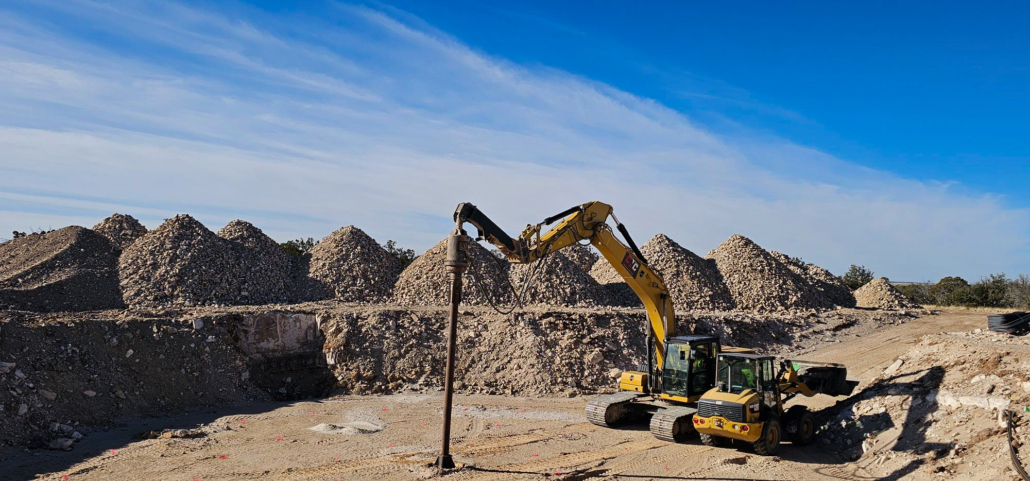
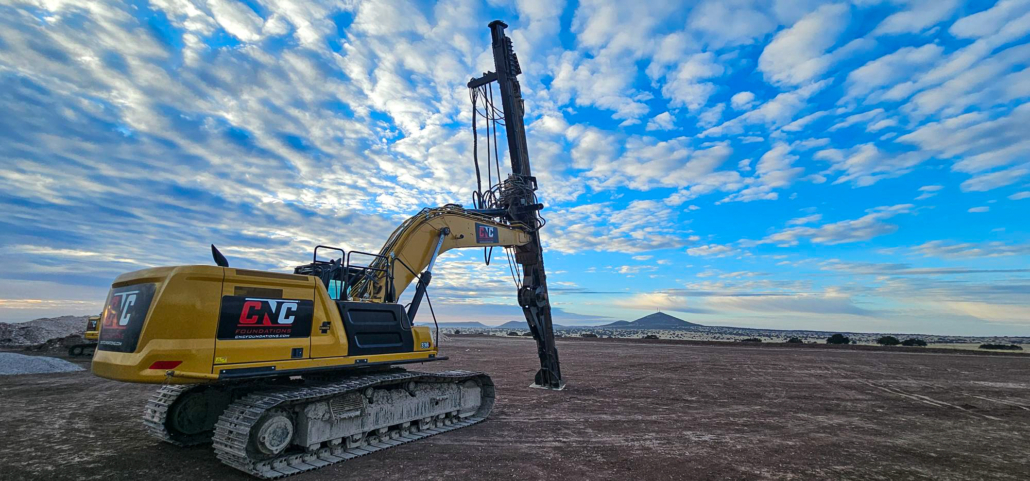
CNC Foundations (CNC) supported the landmark SunZia Wind Project in New Mexico with ground improvement services using vibratory stone columns. While CNC Foundation’s scope consisted of over 175 aggregate piers totaling over 1,300 linear feet, this work contributed to one of the most significant renewable energy developments in North America.
Developed by Pattern Energy, the SunZia project features over 900 GE Vernova and Vestas turbines, along with a 550-mile, 525 kV HVDC transmission line that delivers clean energy to Arizona and California. Once fully operational, SunZia is expected to generate 3.5 gigawatts of power, support 3 million homes, create over 2,000 construction jobs, and drive $20.5 billion in economic impact across New Mexico and Arizona.
CNC’s solution provided crucial stability in geologically sensitive terrain, supporting the reliable rollout of this historic renewable energy infrastructure.
- Owner: Pattern Energy Group LP
- General Contractor: Blattner Energy Inc.
- Structural Engineer: RRC Power & Energy
- Project Timeline: 2 Production Days
- Install Numbers: 190 aggregate piers at over 1,300 linear feet
- Design Bearing Capacity: 4,000 psf
- Service: Aggregate Piers – Vibratory Stone Column
- Market Sector: Wind Farm
- Project Scale: Over 1,000 turbines across two counties
CUSTOMER’S REQUIREMENTS & CHALLENGES
The project required a foundation system capable of supporting wind turbine loads in an area characterized by collapsible soil layers, variable shallow bedrock. These conditions introduced risks of void migration, differential settlement, and inconsistent bearing performance across the site. CNC Foundations was tasked with delivering a stable, uniform, rapid-installation solution that could adapt to these geotechnical extremes while keeping pace with the broader construction schedule of this massive renewable energy initiative.
SOIL CONDITIONS
Subsurface investigation identified several challenges requiring targeted ground improvement:
- Weak Near-Surface Soils: Collapsible soils, soft clays, and loose sands reduced bearing capacity across upper layers.
- Shallow Hard Rock Zones: Hard bedrock at variable shallow depths complicated consistent foundation design.
These variable and high-risk conditions necessitated a ground improvement system capable of delivering uniform support, mitigating settlement, and adapting to localized geotechnical extremes across the site.
SOLUTIONS & RESULT
CNC Foundations installed 190 aggregate piers to improve subsurface performance. Using a vibratory flot, stone was placed and compacted in vertical lifts from design depth to grade, forming dense aggregate piers that:
- Increased allowable bearing capacity
- Controlled settlement within tight tolerances
- Delivered reliable support in karst-prone and collapsible soils
- Enabled fast, low-disruption installation across the site
The work was completed in just helping maintain alignment with the broader construction schedule for this multi-billion-dollar renewable energy initiative.